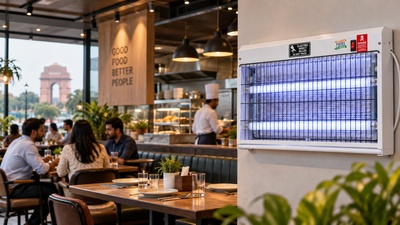
Insect Killer Machine for Hotels: Selection, Placement and Maintenance Guide
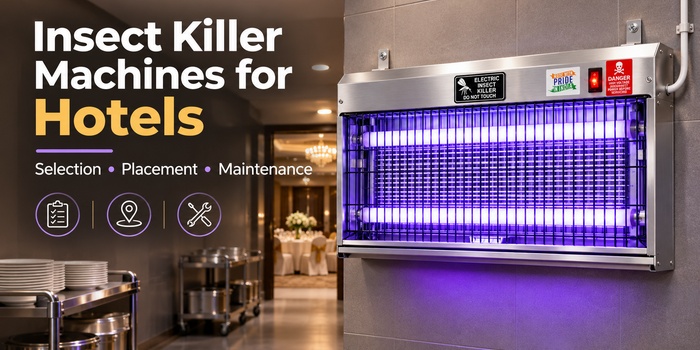
How to Choose, Place and Maintain an Insect Killer Machine for Hotels
Hotels need a considered approach to flying insect control. Kitchens, buffet service points, dishwashing areas, receiving bays and waste zones all have different operating conditions, hygiene risks and maintenance requirements. Selecting one unit solely by price or room size can lead to poor placement, difficult servicing and disruption to day-to-day operations.
This guide explains how hotel procurement, engineering, housekeeping and food operations teams can select, position and maintain an insect killer machine for hotels. It covers practical decisions for food preparation areas, service zones and other commercial spaces while recognising that insect-control equipment should support—not replace—good sanitation and professional pest-management practices.
Why Hotels Need a Planned Flying Insect Control Strategy
Flying insects may enter hotel premises through doors, windows, delivery points, ventilation paths and gaps around building services. Food residues, moisture, waste, drains and warm work areas can also make certain zones more attractive to insects.
A hotel fly killer is most effective when it is part of an area-specific plan. A unit suitable for a back-of-house corridor may not be suitable near a buffet, while a device intended for a dry indoor service area may not be appropriate for a wet or greasy kitchen location.
Common Hotel Areas Where Flying Insects Become a Concern
- Commercial kitchens and food preparation rooms
- Bakery, pastry and sweet-production sections
- Dishwashing and pot-wash zones
- Restaurant service stations and pantry areas
- Buffet support areas and banquet back-of-house spaces
- Staff dining rooms and service corridors
- Waste holding rooms and garbage collection points
- Receiving, loading and delivery areas
- Stores and selected utility or housekeeping spaces
What an Insect Killer Machine Can and Cannot Do
An insect killer machine is generally used to attract and capture or control certain flying insects in an indoor commercial environment. Depending on the unit design, it may use an electric grid or an adhesive glue board for capture. The appropriate method depends on the intended location, food-hygiene considerations and the manufacturer’s installation guidance.
It does not solve the underlying causes of insect activity. Effective commercial insect control for a hotel also depends on waste removal, cleaning routines, drain management, food storage, door discipline, window screening, air curtains where appropriate and a broader pest-control programme.
How to Select an Insect Killer Machine for a Hotel
Before comparing models, define the application. Procurement teams should involve the people who understand the space: kitchen operations, housekeeping, engineering, food safety and the responsible pest-control personnel.
Identify the Area and Insect-Control Objective
Start with the exact location and its purpose. Is the unit intended to support hotel kitchen pest control equipment, reduce flying insect activity in a service corridor, or manage a higher-pressure waste or receiving area? The answer affects the preferred capture method, mounting position, construction and service access.
For example, food service areas may need discreet equipment positioned away from food display and guest sightlines. A receiving area may require a more robust installation approach because of traffic, dust and open-door exposure.
Consider Room Size, Layout and Insect Pressure
Room dimensions matter, but they are not the only selection factor. Also assess ceiling height, partitions, equipment layout, shelving, open doorways, windows, exhaust and fresh-air movement, lighting conditions and the frequency of insect activity.
A large open kitchen may have several distinct work zones rather than one uniform coverage area. Similarly, a compact room with frequent deliveries or open access to a waste zone may have greater insect pressure than its size suggests. Review the manufacturer’s guidance for the specific unit rather than assuming a single machine can serve every part of a hotel.
Choose the Appropriate Capture or Control Method
Common commercial categories include electric grid units and glue-board or adhesive capture units. Grid-based units are designed to control insects using an electrified grid, while glue-board units retain insects on an adhesive surface for contained collection. Each design has different cleaning and placement considerations.
When evaluating an electric fly killer for commercial use, confirm whether its design is appropriate for the intended hotel environment. In food-related locations, assess debris management carefully and follow the equipment manufacturer’s instructions as well as the hotel’s internal food-safety procedures.
Assess Construction, Access and Installation Requirements
Review practical details before ordering:
- Whether the unit can be wall-mounted, suspended or used in a freestanding position
- Access required for cleaning, tray emptying or glue-board replacement
- Availability and replacement process for consumables
- Power supply and cable-routing requirements
- Risk of accidental impact from trolleys, doors or staff movement
- Ease of reaching the unit safely without disrupting operations
Check Safety and Food-Hygiene Compatibility
Before finalising an insect killer machine for a hotel kitchen or food service area, check the operating environment. Steam, water splash, grease, heat, cleaning chemicals and airborne flour or dust can affect suitability and maintenance needs. Avoid making assumptions based on appearance alone; confirm environmental limitations and installation instructions for the specific model with the supplier or manufacturer.
Insect Killer Placement in Different Hotel Areas
Correct insect killer placement in a hotel is as important as the machine itself. A unit should be accessible for service, positioned with airflow and entry paths in mind, and installed so that it does not create a food-hygiene or operational concern.
Hotel Kitchens and Food Preparation Areas
For commercial fly control for kitchens, keep the unit away from direct food exposure, open ingredients, preparation tables and food-contact surfaces. It should not be installed directly above food preparation, cooking or plating areas, as captured insects or debris must not be able to fall onto food or work surfaces.
Avoid positions exposed to active cooking heat, steam, grease accumulation or water splash unless the unit is specifically intended for those conditions. Consider a nearby but separated location, such as an appropriate circulation route or support area, subject to the site layout and manufacturer guidance.
Dining, Buffet and Banquet Service Areas
Guest-facing spaces require a balance between insect control, presentation and safe access. Avoid visibly prominent positions near food displays or serving counters. A discreet service-side location may be more suitable where it remains accessible to authorised staff for routine inspection and cleaning.
Also consider noise, visual appearance, lighting, guest movement and whether the unit could attract attention in a way that affects the dining experience.
Service Areas, Dishwashing Zones and Back-of-House Corridors
Service zones and hotel back-of-house hygiene areas often provide practical locations for insect-control equipment because they connect food operations with receiving, waste and staff circulation routes. However, dishwashing areas may have high moisture levels, while corridors can have trolley traffic and limited wall space.
Place units where they do not obstruct staff movement, emergency access, doors or trolley paths. Ensure housekeeping or engineering teams can safely reach the equipment without standing on unstable surfaces or interrupting service operations.
Waste Storage, Receiving and Loading Areas
Waste and delivery zones can experience higher insect activity due to food residues, open doors and material movement. These areas may also introduce dust, moisture, weather exposure and physical impact risks. Do not automatically install a unit directly beside waste containers or an open entrance. Instead, assess the insect route, airflow, electrical safety and the likelihood of damage.
Where an area is partly open to the outdoors, determine whether an indoor-rated machine is suitable for the exposure conditions. Improve sanitation, waste handling and door management alongside any equipment installation.
Entrances, Windows and Airflow Paths
Doors, windows, vents and air currents influence how insects move through a hotel. Avoid placing a unit in a position that may draw insects towards food preparation or serving areas. It should also not block a passageway or be installed where doors, curtains or stored materials repeatedly obstruct it.
Review nearby openings, delivery schedules, exhaust systems and air curtains when choosing a location. The goal is to support flying insect control for hotels without creating an avoidable hygiene or access issue.
Wall-Mounted, Suspended or Freestanding Placement
| Installation option | Practical considerations |
|---|---|
| Wall-mounted | Useful where secure wall space and routine service access are available. Check mounting surface, cable routing and clearance for cleaning. |
| Suspended | May suit open service or utility areas where ceiling height, secure fixing and safe access for maintenance can be confirmed. |
| Freestanding | Can offer flexibility in some controlled locations, but requires assessment of stability, tampering, floor cleaning and impact from people or trolleys. |
Always follow the specific product’s installation instructions. Do not alter mounting arrangements, electrical connections or safety components without authorised guidance.
Hotel Insect Killer Maintenance Checklist
Hotel insect killer maintenance should be assigned to a clear owner, whether that is housekeeping, engineering, kitchen stewardship or an external service partner. A neglected machine can become difficult to clean, less useful operationally and harder to inspect during hygiene checks.
Daily or Routine Visual Checks
- Check that the unit is powered and unobstructed.
- Look for visible insect accumulation, full collection trays or saturated glue boards.
- Check for damaged covers, loose fittings, unusual noise or signs of electrical issues.
- Ensure nearby materials, packaging or equipment have not blocked the unit.
- Report recurring insect activity in the surrounding area.
Cleaning the Unit Safely
Before cleaning or servicing, isolate the power supply according to the manufacturer’s instructions. Allow the unit to cool where relevant. Use suitable tools and cleaning methods specified in the manual, and avoid allowing moisture or cleaning chemicals to enter electrical components.
Staff should not attempt unauthorised electrical repairs. In kitchen and food service areas, schedule cleaning to avoid contamination risks and follow the hotel’s established hygiene procedures.
Replacing Glue Boards, Trays or Other Consumables
Replace glue boards, empty collection trays and renew other consumables based on their condition and the manufacturer’s guidance. A board that is full, dusty, contaminated or no longer adhesive should not remain in service. Handle used consumables carefully and dispose of them through the hotel’s appropriate waste process.
Lamp, Grid and Electrical Inspection
Follow the manufacturer’s recommended replacement or service schedule for lamps and other components. Facilities teams should inspect visible parts for damage, but qualified personnel should handle electrical faults, internal repairs and component replacement where required. Keep replacement parts matched to the relevant model.
Record-Keeping and Escalation
A commercial insect control maintenance checklist should include the inspection date, location, observed condition, cleaning completed, consumables changed and any faults or pest-activity observations. Repeated insect activity may indicate a wider issue, such as waste handling, a door-sealing problem, drainage concerns or a need to review the hotel’s pest-control programme.
Common Mistakes Hotels Should Avoid
- Choosing only by room size or price: Layout, airflow, insect pressure, hygiene needs and maintenance access are equally important.
- Installing a unit above food or preparation surfaces: This can create avoidable contamination and cleaning concerns.
- Choosing an inaccessible position: If staff cannot inspect and clean the unit safely, routine maintenance is likely to be missed.
- Ignoring doors, waste and sanitation: Equipment cannot compensate for poor waste control, open access points or inconsistent cleaning.
- Using a unit in unsuitable heat, grease or moisture: Verify environmental suitability before installation rather than assuming every commercial unit suits every area.
Hotel Buyer’s Pre-Purchase Checklist
Questions for the Supplier
- Which type of hotel area is the model intended to serve?
- What installation methods are supported?
- What clearance and access are needed for cleaning and servicing?
- Which consumables or replacement components are required?
- What are the electrical requirements?
- Are there restrictions relating to moisture, steam, grease, dust or heat?
- What operating, cleaning and installation documentation is provided?
Questions for Hotel Internal Teams
- Where are insects most frequently observed, and at what times?
- Are food safety, kitchen, engineering and housekeeping teams aligned on the proposed location?
- Can the unit be cleaned safely without interrupting guest service or kitchen work?
- Are waste management, drainage and access-control issues being addressed at the same time?
- Who will maintain inspection records and escalate faults or recurring activity?
Frequently Asked Questions
What is an insect killer machine for hotels used for?
An insect killer machine for hotels is used to support control of flying insects in selected commercial areas such as kitchens, service zones, corridors, receiving areas and waste-related spaces. It should form part of a wider hygiene and pest-management programme.
How is a hotel fly killer different from general pest-control measures?
A hotel fly killer is a piece of equipment intended to attract and capture or control flying insects in a defined location. General pest-control measures include sanitation, waste control, proofing, door management, inspections and professional treatment where needed. Both are important.
Where should an insect killer be placed in a hotel kitchen?
Place it in a location that is away from open food, food preparation surfaces, cooking heat, steam, grease and water splash. The final position should consider the layout, insect entry paths, access for cleaning and the manufacturer’s installation guidance.
Can an insect killer machine be installed above food preparation or serving areas?
It should not be installed directly above food preparation, food display or serving surfaces, as this can create contamination and cleaning concerns. Choose a separated, accessible location appropriate to the equipment design and site conditions.
How often should a hotel insect killer machine be cleaned?
Carry out routine visual checks frequently and clean the unit whenever insect accumulation, debris or the condition of a tray or glue board requires attention. Follow the manufacturer’s instructions and the hotel’s hygiene schedule for the specific model and area.
Does an insect killer machine replace professional pest control or sanitation practices?
No. It is one part of commercial insect control for a hotel. Regular cleaning, waste management, building maintenance, screening, access control and professional pest-control support remain necessary.
Match the Machine to the Hotel Environment
The right insect killer machine for hotels is selected by looking beyond a simple room-size calculation. Hotel teams should assess the exact area, food-hygiene requirements, insect pressure, airflow, mounting options, exposure to heat or moisture and the ability to maintain the unit consistently.
For a practical selection discussion, hotel procurement, engineering and facilities teams can share their application details with LaviPro, including the intended area, room layout, mounting preference, operating environment and maintenance requirements. This helps identify a suitable commercial insect-control solution for the specific hotel application.
About
LaviPro Expert is a kitchen appliance expert with years of experience reviewing and testing products for LaviPro.