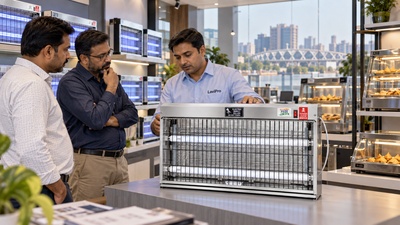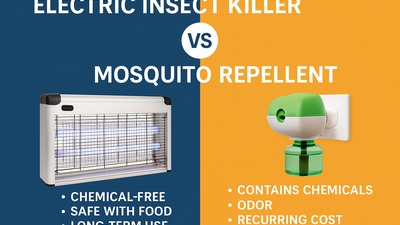
Supplying Chennai’s Commercial Kitchens and Institutions: A Dealer Guide to Insect Killers and Food Warmers
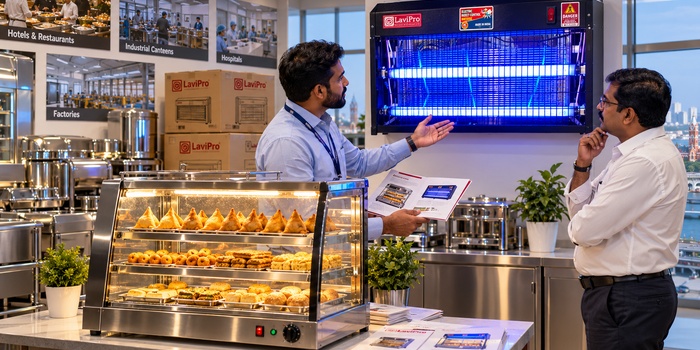
A Chennai Dealer Guide to Supplying Insect Killers and Food Warmers
For Chennai dealers, institutional suppliers, GeM vendors and bulk buyers, insect-control equipment and food-holding equipment can be practical additions to a broader commercial supply portfolio. These categories are rarely purchased in isolation by large facilities. They may form part of a kitchen setup, canteen upgrade, hospitality equipment package or multi-site institutional procurement plan.
An insect killer for commercial buyers Chennai and a food warmer for commercial kitchens Chennai should be evaluated as application-based equipment categories, not as ordinary retail products. The right recommendation depends on the buyer’s layout, operating routine, quantity requirement, maintenance expectations and need for consistent supply across locations.
This guide helps commercial equipment dealers assess requirements, prepare better quotations and plan repeat procurement without making assumptions about site conditions or product performance.
Why These Categories Matter to Commercial Equipment Dealers in Chennai
Commercial kitchens and institutional food-service facilities often require several equipment categories at the same time. A canteen project may include cooking equipment, preparation tables, storage units, serving counters, food warmers and insect-control equipment as separate line items. A hotel kitchen equipment supplier can therefore treat these products as complementary components within a larger requirement.
For dealers exploring commercial equipment dealer opportunities Chennai, the value is not simply in one-time supply. It is in creating a structured procurement approach that can support phased delivery, replacement requirements, branch expansion and repeat orders where the buyer’s operations require them.
Typical Buyer Segments
- Factories and industrial canteens
- Hospitals, hostels and institutional dining facilities
- Hotels, restaurants and caterers
- Corporate cafeterias and staff meal areas
- Educational campuses and other institutional kitchens
- Commercial kitchen equipment wholesalers Chennai serving project-based buyers
- Hospitality and facility-management suppliers handling bulk requirements
Each segment has different service patterns. A factory canteen may focus on meal volume and shift timing, while a hotel may need equipment matched to service counters, buffet arrangements or back-of-house workflow. The dealer’s role is to collect the right operating information before selecting a model.
Why Institutional Procurement Differs from Retail Resale
Institutional buyers commonly expect clearer documentation, consistent specifications, commercial invoicing, quantity planning and defined warranty terms. They may also need the same equipment configuration across several locations. This makes standardisation important: a buyer can simplify staff familiarisation, replacement planning and future purchasing when similar units are supplied across sites.
Before quoting, dealers should establish whether the requirement is for a single location, a phased rollout or repeated procurement. A low initial quantity does not always mean a retail-style requirement; it may be the first stage of a larger project.
Understanding the Two Product Categories
Insect Killers for Commercial and Institutional Environments
Commercial insect-control equipment may be considered in food-service, dining, storage, service and waste-related areas, subject to the buyer’s site practices and operational requirements. Buyers may use terms such as industrial insect killer Chennai, fly killer for commercial kitchen Chennai or UV insect killer Chennai commercial. However, terminology alone should not determine the recommendation.
Dealers should confirm the intended application, target flying-insect concern, installation position, room layout and current manufacturer documentation. An insect killer is only one part of an overall site approach; it does not replace cleaning, sanitation, waste handling, entry-point management or any broader pest-management process required by the facility.
Food Warmers, Hot Cases and Display Warmers
Food warmers are used to hold or present prepared food during service, depending on the equipment design and intended application. In procurement discussions, buyers may refer to a general food warmer, electric hot case Chennai, food display warmer Chennai, snack warmer Chennai or samosa warmer Chennai. These names can vary between buyers and should be clarified before quotation.
A food warmer for factory canteen Chennai may be selected primarily around meal volume, service intervals and staff workflow. A food warmer for hotel kitchen Chennai may need to fit a different service format. The correct choice should be based on the food type, loading method, available space, service pattern and current product specifications rather than only on the product name.
How to Specify an Insect Killer for a Commercial Buyer
A dealer supplying an insect killer for institutional suppliers Chennai should begin with a site-based requirement discussion. Avoid recommending a unit only from a generic description or search term such as mosquito killer machine bulk purchase Chennai. Product suitability must be confirmed from the actual application and manufacturer documentation.
Application and Installation Area
Ask where the equipment is proposed to be used. Relevant areas may include dining spaces, service counters, storage rooms, waste-handling zones or other locations identified by the facility. Food-preparation areas may have particular site requirements, so installation decisions should be taken in line with the buyer’s operating procedures and layout.
Room Size, Layout and Operating Conditions
Room layout affects placement, access and practical usefulness. Entrances, windows, service openings, lighting conditions, ceiling height, equipment placement and routine staff movement can all influence the installation decision. Rather than relying on an unverified coverage claim, request a layout or photographs where the requirement is complex.
Construction, Maintenance and Access
Commercial buyers should review how routine cleaning and servicing will be handled. Dealers can ask whether the proposed location allows safe access, whether replacement components are available for the selected model, and who will carry out routine maintenance. Any claims about construction, continuous-use suitability or material properties should be supported by current product documentation.
Questions to Confirm Before Quotation
- How many units are required, and for which locations?
- What is the intended installation area for each unit?
- Is a common model required across multiple sites?
- What operating hours and maintenance expectations apply?
- Are installation instructions or site-specific guidance needed?
- What delivery schedule, warranty scope and service process does the buyer expect?
How to Specify a Food Warmer or Hot Case
For a food warmer bulk purchase Chennai requirement, capacity should not be treated as a standalone number. Dealers need to understand how food is produced, transferred, held, served and replenished during peak periods.
Capacity and Service Volume
Ask about the approximate meal volume, peak service window, serving frequency, batch size and available counter or floor space. A facility serving meals in repeated batches may have different needs from one that presents snacks continuously at a service counter. Capacity information should always be verified against the selected model’s current documentation.
Food Type and Presentation Format
A general food warmer may suit one service process, while a display-oriented unit may suit another. A snack warmer or samosa warmer may be requested where the buyer’s focus is on a particular snack presentation format. A hot case for institutional buyers Chennai may refer to a different configuration depending on the purchaser. Dealers should document the food type, tray or container format and intended service method before recommending equipment.
Temperature Holding and Operating Controls
Buyers should review the operating controls, instructions and intended food-holding process for the shortlisted model. Do not promise a specific temperature range, holding duration or food-quality outcome unless it is verified for that model and appropriate for the buyer’s process. The facility remains responsible for its food-handling procedures and internal operating controls.
Cleaning, Loading and Daily Workflow
In busy institutional kitchen equipment Chennai projects, daily usability matters. Consider who will load the unit, how often food is replenished, how cleaning will be performed, whether staff can access controls easily and whether the proposed location interferes with serving flow. A model that fits the workflow is generally easier for the buyer to adopt and reorder consistently.
Procurement Criteria for Chennai Dealers and Institutional Suppliers
Product Consistency for Multi-Site Orders
Standardisation can help facilities operating factories, branches, campuses or hotel groups. When the same approved model is used across sites, the buyer can create more consistent operating instructions, simplify replacement planning and make future purchase decisions more straightforward. This does not mean every site must use identical equipment; it means the specification should be intentionally controlled.
Bulk Ordering and Repeat Procurement
For insect killer bulk purchase Chennai or bulk hospitality equipment Chennai requirements, establish whether delivery is needed in one dispatch or in phases. Dealers should clarify quantities, delivery locations, packaging expectations, reorder plans and whether the buyer needs the same model again later. A repeat-order plan is especially useful where a project rollout is linked to site openings, upgrades or seasonal service demand.
Warranty, Service and Spare-Part Clarity
Before committing to a buyer, confirm the written warranty scope for the proposed product, relevant exclusions, claim process and available service route. Ask about replacement-part procedures where applicable. Dealers should avoid assuming warranty periods, local service availability or spare-part stock unless these points are confirmed by the manufacturer or supplier for the specific product.
Supplier Communication and Documentation
A professional quotation should be supported by accurate product details. Depending on what is available, this may include model identification, dimensions, electrical requirements, capacity information, product literature, invoice details, dispatch information and user instructions. GeM vendors and institutional suppliers may also need buyer-specific documents; these should be discussed early rather than assumed.
Building a Combined Equipment Proposal
Insect killers and food warmers can be positioned as separate, useful line items within a broader commercial kitchen or institutional supply proposal. This approach helps the buyer assess each requirement on its own merits while managing procurement through one coordinated equipment plan.
Example Requirement Mapping
A factory canteen may require food-holding equipment for meal service and separate insect-control equipment for appropriate areas identified through its site review. A hotel or catering kitchen may require warming equipment matched to its serving format alongside other kitchen and hospitality items. In both cases, dealers should prepare distinct product lines, quantities and specifications rather than treating the categories as interchangeable.
When to Recommend a Site Discussion
Request a detailed discussion when the buyer has multiple locations, unusual layouts, uncertain installation areas, high service volumes or a requirement for standardised supply. A layout, photographs, service-flow notes and quantity schedule can reduce avoidable errors before the purchase order is issued.
Questions Dealers Should Ask Before Choosing a Manufacturer
- What are the available order quantities and dispatch-planning options?
- Can phased delivery be discussed for multi-site procurement?
- What exact model details, dimensions, electrical information and capacity details are documented?
- What is the written warranty scope and process for the selected product?
- What user instructions, installation guidance or product documentation are available?
- How are service requests and replacement-component requirements handled?
- Can the same specification be supplied for future repeat orders, subject to availability?
A Practical Checklist for Chennai Commercial Equipment Buyers
| Procurement Stage | What to Confirm |
|---|---|
| Before requesting a quote | Application, quantity, site location, operating schedule, food type or insect-control concern, layout and delivery expectation. |
| Before issuing a purchase order | Final model, quantity, dimensions, electrical details, capacity information, warranty terms, delivery scope and documentation. |
| Before reordering | User feedback, maintenance history, site suitability, accepted specification and whether standardisation remains appropriate. |
Frequently Asked Questions
Why should dealers include insect killers and food warmers in institutional supply packages?
They can address separate but related operational needs within commercial kitchens, canteens, hotels and institutional food-service environments. Supplying them as distinct line items within a wider package can make procurement more organised for the buyer.
What information is needed before recommending an insect killer?
Collect the proposed installation area, room layout, quantity, operating conditions, access requirements, maintenance expectations and whether a standard model is needed across several sites. Confirm final suitability from current manufacturer documentation.
How is a food warmer different from a hot case or snack warmer?
These terms are often used differently by buyers. In practical procurement, the dealer should confirm the food type, presentation format, service pattern, capacity requirement, loading method and model specification instead of relying only on the name used in the enquiry.
Why is standardisation important for multi-site buyers?
Using controlled specifications across locations can simplify training, replacement planning, documentation and future reordering. Each site should still be checked for its own space and workflow requirements.
What should be verified before a bulk order is placed?
Verify the model, quantity, dimensions, electrical requirements, capacity information, warranty terms, delivery plan, documentation and any site-specific installation considerations. Do not rely on assumptions or unverified product descriptions.
Plan Your Institutional Equipment Requirement with LaviPro
Chennai dealers, institutional suppliers, GeM vendors and bulk buyers can share their application, quantity, capacity requirement, delivery location and multi-site procurement plan with LaviPro by Lavanya Enterprises. The team can help identify suitable options, prepare a commercial quotation and discuss repeat procurement or standardised supply requirements.
For detailed category information, explore commercial insect killers and food warmers for institutional kitchens, or submit a bulk equipment enquiry with your requirement details.
About
LaviPro Expert is a kitchen appliance expert with years of experience reviewing and testing products for LaviPro.