What Insects Do Electric Insect Killers Kill? A Practical Commercial Guide
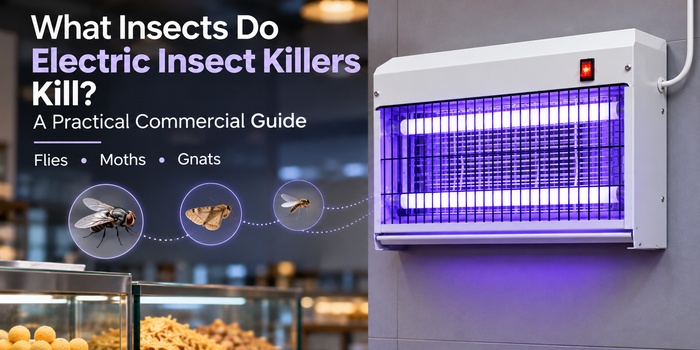
What Insects Do Electric Insect Killers Kill?
Commercial buyers often ask what insects do electric insect killers kill before choosing equipment for a restaurant, hotel, warehouse, office, retail outlet or food-processing area. The practical answer is that these machines are mainly designed to attract, capture or kill certain flying insects that respond to light. Their performance differs by insect species, site conditions and machine design.
Many units are used primarily for flies and other light-attracted flying insects. However, they should not be treated as a universal solution for every pest or as a replacement for cleaning, proofing and other pest-management practices. Understanding how the equipment works helps buyers choose a more suitable option and set realistic expectations.
What Do Electric Insect Killers Do?
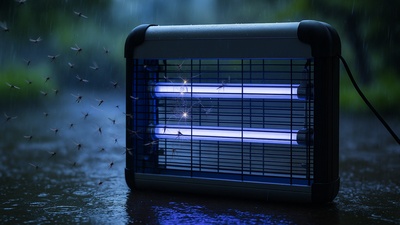
Electric insect killers, also called insect light traps, UV fly catchers or commercial fly killers, use a light source to attract certain flying insects towards the unit. Once insects approach the machine, they may either be killed by an electrically charged grid or captured on an adhesive glue board.
The device does not usually draw every insect from across a premises. It works most effectively on insects that are responsive to the light source and that fly within the unit's attraction zone. Insect behaviour, competing food odours, open doors and bright surrounding lights can all affect results.
How UV Attraction Works
Many electric insect killers use UV-A or similar wavelengths that can be visible or attractive to certain flying insects. Insects with stronger light-seeking behaviour may approach the unit, particularly in indoor areas where other light sources are limited.
UV attraction is not universal. Different insects respond to different cues. Some may be attracted by light, while others rely more heavily on food odours, moisture, carbon dioxide, warmth or host-related scents. This is one reason why UV insect killer effectiveness varies by species and environment.
How Electric Grid and Glue-Board Models Work
Not every electric insect killer uses the same capture method.
- Electric-grid models: Insects attracted into the unit contact an electrically charged grid, which kills them.
- Glue-board models: Insects are attracted towards the light and become trapped on an adhesive board. These are often referred to as UV fly catchers or glue-board insect light traps.
Both designs can support flying insect control for businesses when selected and positioned correctly. The appropriate choice depends on the premises, intended use, cleaning requirements and the manufacturer's guidance.
Do Electric Insect Killers Work on Flies?
Yes, many common nuisance flies may be attracted to light-based insect killers, which is why flies are a key use case for commercial equipment. An electric insect killer for flies can help reduce or monitor flying insect activity around the unit, especially where it is installed along likely flight paths or near controlled entry areas.
However, a commercial fly killer cannot be expected to solve every fly issue on its own. Flies may continue to enter if waste is exposed, food residue remains, drains are poorly maintained or doors are left open frequently.
Which Types of Flies May Be Attracted?
House flies, fruit flies and other flying nuisance flies may respond differently to an insect light trap. Their attraction can vary according to species, available food sources, lighting, temperature and activity patterns. A fly killer machine for commercial use should therefore be selected based on the main insect concern rather than an assumption that all flies react in the same way.
For example, flies that are strongly drawn to food waste or fermenting material may remain more focused on those sources than on a light trap. Removing the attraction source is an important part of effective control.
Why Fly Control Requires More Than a Machine
A unit can capture or kill flies near the device, but it does not remove the reasons flies are present. For more reliable results, combine fly control equipment with practical site measures such as:
- Cleaning food preparation and storage areas thoroughly.
- Managing waste bins and ensuring lids are used where suitable.
- Removing spills, food residue and standing water promptly.
- Maintaining drains and keeping disposal areas clean.
- Keeping doors, windows and delivery entrances managed or screened where appropriate.
- Checking for gaps, damaged seals and other entry points.
Do Electric Insect Killers Work on Mosquitoes?
An insect killer may catch some mosquitoes in certain conditions, but a general UV insect killer should not be assumed to be a dedicated or complete mosquito-control solution. Many mosquito species are not strongly attracted to UV light alone.
Mosquitoes commonly respond to cues such as carbon dioxide, body heat, body odour and moisture. As a result, an insect killer for mosquitoes needs to be assessed according to its stated intended use and attraction method rather than simply because it has a UV lamp.
Why Mosquito Attraction Can Be Limited
UV light may play a role in the behaviour of some mosquitoes, but it is not always the strongest cue that guides them towards people or animals. A machine designed mainly as a fly catcher may therefore have inconsistent results where mosquitoes are the primary concern.
Buyers should avoid relying on a standard electric insect killer alone in areas with regular mosquito activity. Source reduction, water management, exclusion and other appropriate mosquito-control measures may also be needed.
What to Check Before Choosing a Mosquito Device
Before purchasing a device for mosquito concerns, review the manufacturer's stated intended insect types, attraction system, recommended installation environment and maintenance requirements. Do not assume that an indoor fly killer is suitable for all mosquito situations or for outdoor exposure.
What Other Flying Insects Can They Address?
Depending on the species and conditions, electric insect killers may attract and capture or kill moths, gnats and some other small flying insects. These insects may be more likely to approach a UV-based device when they display stronger phototactic, or light-seeking, behaviour.
Light-Attracted Insects
In addition to flies, a UV insect killer may address certain moths, gnats and other flying insects that respond to the unit's light source. The actual catch will depend on the local insect population, the surrounding environment and whether stronger attractants are present nearby.
Insects They Usually Do Not Address Effectively
Electric insect killers are not intended to control crawling pests such as cockroaches, ants, termites or bed bugs. They may also have limited value for flying insects that are not attracted to the machine's light or capture system. Equipment should always be matched to the pest issue rather than used as a general-purpose pest-control substitute.
How Effective Are UV Insect Killers in Commercial Spaces?
UV insect killer effectiveness in commercial spaces is situational. In restaurants, hotels, food-service areas, retail premises, warehouses and offices, a well-positioned unit can support the reduction and monitoring of flying insects near the installation point. It cannot guarantee that all insects will be removed from an entire building.
For commercial insect control solutions, the device should be treated as one part of a wider site-management approach. This is particularly important in premises with frequent deliveries, open entrances, food handling, waste storage or heavy foot traffic.
Factors That Affect Performance
- Placement: The unit needs to be visible and accessible to target insects without being obstructed.
- Competing light: Bright windows, display lighting or nearby lamps may reduce the unit's relative attraction.
- Entry points: Open doors, windows and loading areas can allow a continuous inflow of insects.
- Airflow: Fans, air curtains and ventilation patterns can change insect flight routes.
- Insect species: Not all species respond equally to UV or similar light sources.
- Hygiene: Food residue, waste, drains and moisture can remain stronger attractants than the machine.
- Maintenance: A poorly cleaned unit or overdue glue board may not perform as intended.
Capture or Killing Is Not the Same as Prevention
A commercial fly killer can trap or kill insects that approach it. It does not physically stop insects from entering a facility, eliminate breeding sites or remove all attraction sources. Prevention requires a combination of sanitation, exclusion, waste management and routine monitoring.
Where Should a Commercial Fly Killer Be Installed?
Insect killer placement has a major effect on performance. Install the unit according to the manufacturer's instructions and consider likely insect flight paths, entrances and areas where flying insects are noticed. The ideal location will vary between a kitchen, dining space, warehouse, retail outlet or office.
In food-related environments, placement should also consider the risk of food exposure and the site's hygiene procedures. Avoid treating installation as a one-time decision; review catch activity and site conditions over time.
Placement Considerations
- Position the unit where flying insects are likely to pass, rather than in a hidden or heavily obstructed location.
- Avoid placing it directly beside bright windows or other competing light sources where possible.
- Consider doors, delivery routes and windows, while following site-specific hygiene and safety requirements.
- Ensure safe access for cleaning, glue-board replacement or collection-tray emptying.
- Keep the device away from areas where it may be damaged, blocked or contaminated.
- Do not assume an indoor unit is suitable for outdoor installation; check the product guidance first.
Maintenance and Hygiene
Regular servicing is essential. Cleaning frequency depends on insect activity, dust levels, the machine type and site procedures. Collection trays should be emptied where applicable, glue boards should be replaced when needed, and lamps or other components should be checked according to manufacturer guidance.
Food businesses and other controlled premises may also benefit from recording servicing and catch observations as part of their internal hygiene or pest-monitoring process.
Can One Electric Insect Killer Replace Pest Control?
No. An electric insect killer should not be viewed as a complete replacement for an integrated pest-control programme. It can be a useful layer for attracting, capturing, killing or monitoring selected flying insects, but it does not address every source of infestation or entry.
Use It as One Layer of an Integrated Approach
Integrated pest management for flying insects may include cleaning, waste control, drain maintenance, removal of standing water, proofing gaps, door management, regular inspection and professional pest-control support where needed. A fly killer machine can complement these measures by helping manage insect activity in suitable indoor locations.
How to Choose a Commercial Electric Insect Killer
Choosing commercial equipment is not only about selecting a larger machine. Buyers should consider the insect problem, operating environment, capture method and servicing needs before finalising a purchase.
Match the Device to the Main Insect Problem
Identify whether the concern is mainly flies, moths, gnats, mosquitoes or another insect. If flies are the main issue, a commercial fly killer or UV fly catcher may be relevant. If mosquitoes are the main concern, examine whether the device is specifically intended for that use and how it attracts mosquitoes.
Evaluate the Capture Method, Installation and Servicing Needs
Compare electric-grid and glue-board designs based on the intended setting. Also consider construction, access for cleaning, replacement-component availability, safe installation, operating conditions and the manufacturer's maintenance instructions.
Ask the Supplier the Right Questions
- Which flying insects is this equipment intended to address?
- Does it kill insects using a grid or capture them on a glue board?
- Is it suitable for the intended indoor or outdoor environment?
- What placement approach is recommended for this type of premises?
- What routine cleaning and replacement tasks are required?
- What limitations should we expect based on insect behaviour and site conditions?
Frequently Asked Questions
What insects do electric insect killers kill?
Electric insect killers are mainly designed for certain flying insects that are attracted to their light source. They may address flies, moths, gnats and similar light-responsive insects. Results vary by species, placement and local conditions.
Do electric insect killers kill all types of flies?
No. Many flies may be attracted to a light-based device, but not every fly species responds equally. Food odours, waste, drains, open doors and sanitation conditions also affect whether flies approach the unit.
Are UV insect killers effective against mosquitoes?
UV light alone may not be a reliable mosquito attractant because many mosquitoes respond more strongly to carbon dioxide, warmth, odour and moisture. Check whether a device is specifically intended for mosquito use before selecting it.
Do electric insect killers work outdoors?
Outdoor suitability depends on the product design, environmental exposure, installation method and manufacturer instructions. Do not assume that a unit made for indoor use can be safely or effectively installed outdoors.
Do electric insect killers prevent insects from entering?
No. They generally attract and capture or kill insects near the unit. Preventing entry requires measures such as managing doors, screening openings, sealing gaps and maintaining good site hygiene.
Are electric insect killers enough for a restaurant or food facility?
They can support flying insect management, but they should be used alongside sanitation, waste control, entry-point management, monitoring and other appropriate pest-control measures. One machine should not be expected to control an entire fly problem.
Choose Equipment With Realistic Expectations
Electric insect killers can be useful fly control equipment for commercial premises when they are matched to the target insect, installed correctly and maintained routinely. Their role is to attract, capture or kill suitable flying insects near the device—not to replace prevention or complete pest management.
If you are evaluating an insect-control option for your business, share the main insect problem, premises type, installation environment and intended use with LaviPro. Our team can help you assess suitable options and the right questions to ask about attraction method, capture or killing mechanism, installation, maintenance and practical limitations.
About
LaviPro Expert is a kitchen appliance expert with years of experience reviewing and testing products for LaviPro.