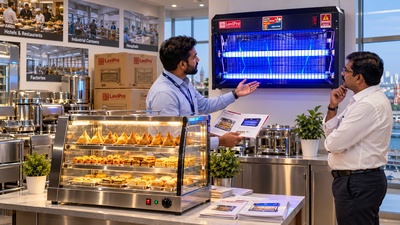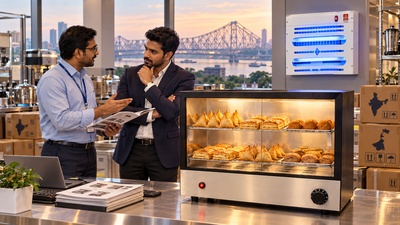
Serving Bangalore’s Corporate Cafeterias and Cloud Kitchens: A B2B Guide to Insect Killers and Food Warmers
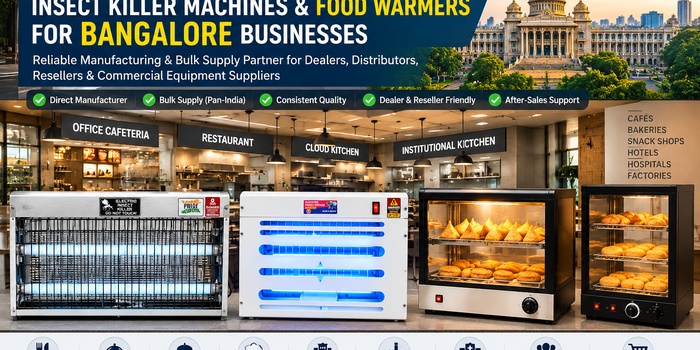
A B2B Equipment Guide for Bangalore’s Corporate Cafeterias, Cloud Kitchens and Food Businesses
Corporate cafeterias, office canteens, cloud kitchens and managed food-service locations have different procurement needs from a standalone restaurant. They often operate across multiple shifts, serve changing menus, coordinate with facility teams and require equipment that can be selected consistently for more than one site.
For restaurant equipment dealers, facility-management suppliers, cafeteria contractors and bulk purchasers, insect killers and food warmers are useful categories to evaluate as part of a broader commercial kitchen and service-area package. An insect killer for corporate cafeteria Bangalore requirements may support hygiene-management workflows, while a food warmer can support organised holding and display during service. The right choice depends on the site, menu, service model, available space and operating practices.
This guide explains how to assess these categories for Bengaluru’s office food-service and cloud-kitchen environments. It is intended as a buying and planning resource, not a substitute for site assessment, electrical review, food-safety guidance or professional pest-management advice.
Bangalore’s Changing Commercial Food-Service Requirements
Modern workplace food service is often planned around predictable meal windows, high-volume service periods and consistent presentation. Corporate cafeterias may serve employees over breakfast, lunch, evening snacks or multiple shifts. Cloud kitchens, by contrast, may focus more on preparation, packing and dispatch. Both environments need practical equipment selection, but their workflows are not identical.
For a commercial equipment supplier, the objective is not simply to sell individual units. It is to help the buyer match equipment with the actual operating environment: where food is held, how staff access it, where service queues form, how cleaning takes place and how future locations may be added.
Who Buys This Equipment?
Typical buyers and specifiers include restaurant equipment dealers in Bangalore, institutional kitchen suppliers, GeM vendors, distributors, corporate cafeteria contractors, facility-management suppliers, cloud-kitchen suppliers and procurement teams handling bulk purchases.
A dealer may require an insect killer reseller Bangalore option for project supply, while a cafeteria contractor may need a food warmer for an office canteen Bangalore location. A facility supplier may be planning recurring requirements across several client sites. Each situation needs a clear application brief before product selection begins.
Why Procurement Is Different for Multi-Location Operations
When equipment is being supplied to several office cafeterias or commercial kitchens, standardisation becomes important. Selecting suitable common models can simplify ordering, training, installation coordination and future replacement planning.
- Consistent product selection across comparable sites
- Clear site-wise quantities and delivery locations
- Packaging and dispatch planning for project deliveries
- Product documentation for purchaser and site teams
- Replacement-component and service-support discussions before recurring procurement
- Scope for repeat orders when new cafeterias or kitchen locations are added
However, standardisation should not override site conditions. A compact pantry counter, a large employee dining area and a dispatch-focused kitchen may each need a different configuration.
Where Commercial Insect Killers Fit in Corporate Food-Service Environments
A commercial insect killer can be considered as one part of a wider hygiene-support approach. It does not replace regular cleaning, covered waste handling, drainage maintenance, screening, housekeeping practices or professional pest-control programmes where required.
When buyers evaluate a commercial insect killer Bangalore bulk requirement, they should begin with the target area and operating conditions rather than selecting only by appearance or price. Product design, intended insect type, placement and maintenance access all affect suitability.
Applications in Office Cafeterias and Canteens
An insect killer machine for office cafeteria Bangalore projects may be considered for appropriate dining, service, entrance or back-of-house areas, subject to the equipment instructions and site assessment. Placement should support routine cleaning and maintenance while avoiding interference with staff movement or customer flow.
Before recommending a unit, suppliers should review:
- The area where flying-insect activity is being observed
- Entrances, service counters, waste-handling points and nearby openings
- Whether the proposed position is accessible for cleaning and routine checks
- Electrical point availability and cable-routing needs
- Site rules for wall mounting, hanging or countertop placement
- Manufacturer guidance on intended installation environments
An insect killer should not be positioned casually near exposed food without confirming the product instructions and the customer’s operational requirements.
Applications in Cloud Kitchens and Commercial Kitchens
For an insect killer for cloud kitchen Bangalore procurement requirement, kitchen layout should be reviewed carefully. Preparation, washing, packaging, dispatch and loading areas can have different conditions. A fly killer for commercial kitchen Bangalore use should be considered in relation to ventilation, door openings, cleaning routines, waste flow and the location of food-handling activities.
Cloud kitchens can have frequent movement around dispatch and delivery pickup points. Rather than assuming one unit suits the whole premises, suppliers should assess the relevant zones and identify whether the application calls for insect-control equipment, improved screening, waste-management action or a combination of measures.
What to Check Before Buying an Insect Killer
Whether sourcing a UV fly killer commercial Bangalore requirement or comparing insect-control options for a facility supplier, ask for product-specific details before confirming an order.
- Intended application: Confirm that the equipment is appropriate for the proposed commercial environment.
- Manufacturer-provided coverage guidance: Review only the information applicable to the specific model.
- Installation method: Check whether the unit is designed for the proposed mounting or placement method.
- Operating conditions: Consider heat, moisture, dust, ventilation and exposure to outdoor conditions.
- Cleaning access: Ensure maintenance staff can safely access the unit.
- Replacement needs: Ask about applicable consumables or replacement components, where relevant.
- Electrical requirements: Verify the site’s available power points and installation arrangements.
A mosquito killer wholesale Bangalore enquiry should also be specific about the intended application. Products designed for different insect-control situations may not be interchangeable.
Choosing a Food Warmer for Corporate Cafeterias and Cloud Kitchens
Food warmers can support organised holding, service and display workflows. They are commonly considered for prepared foods that need to remain available during a service period, subject to the operator’s menu process and food-safety procedures. A food warmer is not a replacement for proper cooking, temperature monitoring, safe holding practices or timely food rotation.
Buyers searching for a food warmer for corporate cafeteria Bangalore should assess how the equipment will be used during actual service, not only how it looks in a catalogue.
Common Food-Warmer Applications
Different equipment formats may suit different service needs:
| Equipment Category | Typical Planning Consideration |
|---|---|
| Hot case for cafeteria | May suit counter-based holding and serving where staff need accessible food storage during service. |
| Food display warmer | May be considered where product visibility and customer-facing presentation are important. |
| Snack warmer | May suit snack counters handling prepared items over a defined service period. |
| Samosa warmer or patties warmer | May be relevant for menu-specific snack service, depending on product size, quantity and replenishment pattern. |
| Electric food warmer | Requires electrical planning, safe placement and consideration of the operating workflow. |
The terms food warmer, hot case, snack warmer and food display warmer are sometimes used broadly in procurement discussions. The practical difference is usually in intended use, cabinet or display format, access arrangement, capacity configuration and counter placement. Buyers should rely on model-specific information rather than assuming that all formats serve the same menu or volume.
Selection Factors for Bulk Buyers
For a commercial food warmer Bangalore bulk purchase, a structured comparison helps prevent unsuitable equipment from being deployed across several sites.
- Menu type and food portions to be held
- Expected service pattern and replenishment frequency
- Required number and type of shelves, trays or compartments
- Available counter footprint and surrounding staff access
- Visibility requirements for customer-facing service
- Cleaning access and daily maintenance practicality
- Controls and operational simplicity for site teams
- Electrical infrastructure at each location
- Access for servicing or future replacement
Food warmer wholesale Bangalore enquiries are stronger when the buyer shares a clear site list, target quantities, preferred format and whether all locations require the same model.
Food Warmers for Office Canteens Versus Cloud Kitchens
An office canteen may need equipment that supports visible counter service and repeated access during peak meal periods. A food warmer for office canteen Bangalore use may therefore be selected around staff movement, counter layout and menu rotation.
A cloud kitchen may use warming equipment differently, potentially around order staging, packing support or dispatch timing. For a food warmer for cloud kitchen Bangalore requirement, suppliers should understand menu type, dispatch volumes, packaging workflow and the time between preparation and pickup. A customer-facing display format may not be necessary for every cloud-kitchen operation.
How Dealers and Facility Suppliers Can Build the Right Equipment Package
Commercial equipment for corporate kitchens Bangalore projects should be planned as a requirement package, not as disconnected product lines. Dealers can add value by collecting site information early and presenting options that fit the customer’s workflow.
For a Single Corporate Cafeteria
Start with a site-specific requirement list. Record service timings, menu categories, food-holding points, available counters, entry and waste areas, electrical points and cleaning access. Then identify whether the requirement is for a hot case for cafeteria Bangalore service, a food display warmer, hygiene-support equipment or a combined package.
For Multiple Office Cafeterias or Recurring Contracts
Facility-management suppliers Bangalore teams often need a repeatable process. Develop a standard requirement form for each site and separate common requirements from site-specific deviations. This helps with quotations, quantity planning and delivery coordination.
For recurring orders, discuss:
- Standard models for comparable locations
- Location-wise quantity schedules
- Delivery sequencing and receiving arrangements
- Product documentation and invoice requirements
- Installation responsibilities at each site
- Replacement and service-support process where applicable
This approach is particularly useful when supplying commercial kitchen equipment distributors, cafeteria operators or institutional kitchen equipment Bangalore projects with future expansion plans.
For Cloud-Kitchen and Restaurant-Equipment Supply
Cloud kitchen equipment Bangalore recommendations should begin with operational questions: What is on the menu? How many dispatch windows are there? Is food held for counter service, packaging or pickup? Where are doors, loading points and cleaning areas located? Is expansion planned?
Restaurant equipment dealers Bangalore can use these inputs to recommend relevant food-warming and insect-control categories without over-specifying equipment that the customer may not need.
B2B Supplier Checklist for Bangalore Buyers
Product and Application Fit
- Is the equipment intended for the proposed commercial application?
- Does the format fit the menu, workflow and physical location?
- Has the buyer reviewed manufacturer-provided installation and operating guidance?
- Are food-safety, hygiene and pest-management processes being addressed separately where required?
Supply and Documentation
- Request a clear quotation with item descriptions and quantities.
- Share delivery locations, receiving constraints and number of sites.
- Ask about order processing, packaging and documentation requirements.
- Confirm whether the required quantities are for one deployment or phased procurement.
Service and Replacement Support
- Ask what product guidance is available for installation and routine care.
- Clarify applicable warranty terms directly with the supplier.
- Discuss availability of relevant replacement components or consumables where applicable.
- Identify escalation contacts and responsibilities before committing to repeat supply.
Questions to Ask Before Placing a Bulk Order
- What are the exact equipment categories required at each site?
- Is the requirement for office cafeterias, cloud kitchens, snack counters or mixed food-service locations?
- What are the site conditions, available space and electrical arrangements?
- Does the menu require a snack warmer, food display warmer, hot case or another format?
- Where will insect-control equipment be placed, and has placement been reviewed against operating guidance?
- What quantity is required now, and what may be needed for future sites?
- What delivery locations, installation coordination and documentation are needed?
- What support is expected for replacement parts, consumables or service guidance?
Frequently Asked Questions
What equipment do corporate cafeterias in Bangalore commonly need for food holding and hygiene-support workflows?
Requirements vary by menu and site. Buyers may evaluate hot cases, food display warmers, snack warmers and other food-holding formats, along with suitable insect-control equipment for relevant areas. Cleaning, waste handling, food-safety procedures and site maintenance remain separate but essential parts of the overall workflow.
How is an insect killer used in an office cafeteria or commercial kitchen environment?
It may be used as part of a broader flying-insect management approach in suitable areas identified through site assessment. Placement should follow product instructions and account for customer flow, food-handling practices, cleaning access, electrical points and operating conditions.
Is a UV fly killer suitable for every commercial kitchen area?
No. Suitability depends on the specific model, manufacturer guidance, layout, food-handling activity and site conditions. It should not be assumed that a UV fly killer is appropriate for every preparation, open-food or damp area without verification.
What should a buyer check before selecting an insect killer for a cloud kitchen?
Check the intended application, installation method, manufacturer-provided coverage guidance, cleaning access, electrical requirements, layout, dispatch points, door openings and the site’s existing sanitation and pest-management processes.
How should a corporate cafeteria choose a food warmer?
Start with the menu, service duration, quantity of food to be held, counter space, staff access, customer visibility needs, cleaning routine and power availability. Select a model only after reviewing product-specific details and the actual cafeteria workflow.
What factors matter when buying food warmers for several office cafeterias?
Bulk buyers should compare standardisation potential, site-wise space, menu differences, electrical readiness, order quantities, delivery scheduling, documentation, cleaning practicality and future replacement or support needs.
Can insect killers replace professional pest control or sanitation procedures?
No. Insect killers do not replace sanitation, waste management, screening, housekeeping or professional pest-control measures. They should be considered only as one element of a broader site hygiene approach.
Choosing a Commercial Equipment Partner in Bengaluru
For dealers, facility-management suppliers, corporate cafeteria contractors, cloud-kitchen suppliers and bulk purchasers, the most useful supplier conversation begins with a well-defined requirement. Share the application, equipment category, expected quantities, number of sites, delivery locations and whether the requirement is a one-time project or recurring supply plan.
LaviPro can be approached for requirement-led discussions on commercial insect-killer options and food-warmer options, along with product documentation and quotation support. Providing complete project details helps evaluate suitable options for corporate cafeterias, office canteens, cloud kitchens and commercial food-service locations in Bangalore and Bengaluru.
About
LaviPro Expert is a kitchen appliance expert with years of experience reviewing and testing products for LaviPro.